
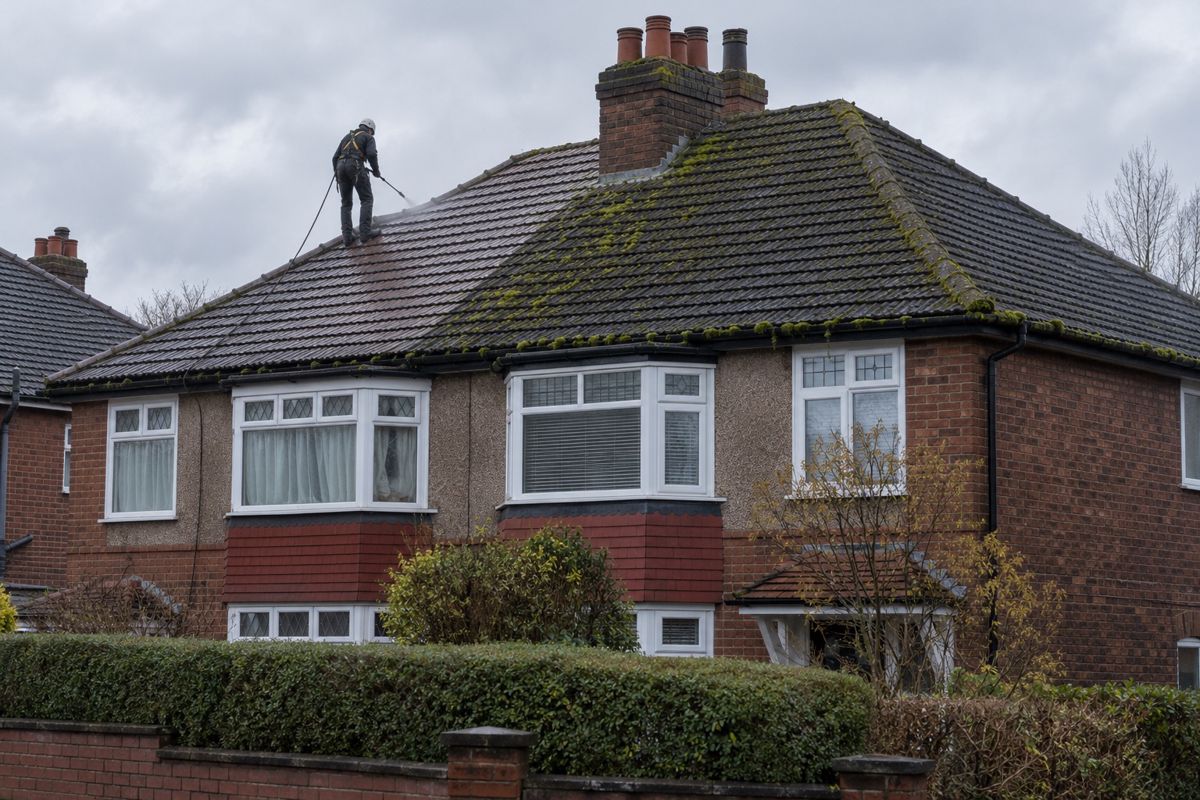
Why do Manchester roofs get covered in moss and black algae?
Rain, damp air and shade give growth a head start. North-facing slopes stay wet for longer, and roofs under trees collect leaves, seeds and bird droppings that feed moss. Over a few seasons the surface changes from clean to patchy to green.
Common signs to look out for:
- Moss building up on the overlaps between tiles and along the gutter edge.
- Dark or black streaks running down the slope, usually algae.
- Orange, grey or pale crusty patches of lichen.
- Debris and moss piling up in valleys and gutters.
Thick moss holds water against the roof covering. In freezing weather that trapped water can contribute to frost damage over time, so a heavily mossed roof is worth attention.